 North Fork (631) 298-8181


Why Is Your Water Heater Not Producing Enough Hot Water in Winter?
Showers that turn lukewarm halfway through are a common winter complaint, and they don’t always mean you need water heater repair right away. Cold weather strains your tank, but a real fault can hide behind the season.
In winter, colder incoming water makes a water heater work harder, so hot water runs out faster. If the drop is sudden or severe, the cause is often sediment buildup, a failed heating element, a broken dip tube, or a thermostat problem. Homeowners can do a few checks, but gas, electrical, and tank repairs belong to a licensed plumber.
Why Does Hot Water Run Out Faster in Winter?
Your water heater has to raise the water from its incoming temperature to the thermostat setting. In winter, water from the well or town supply is much colder, so each gallon takes longer to heat.
A tank that handled two back-to-back showers in July may only manage one in January.
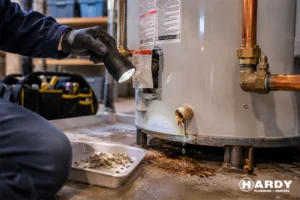
What Causes a Problem That Needs Water Heater Repair?
A big change usually has a specific cause.
1. Sediment buildup in the tank
Minerals settle at the bottom of the tank over time. That layer insulates the water from the burner or lower element, so heating slows down. Popping or rumbling sounds are a common clue.
2. A failed heating element
Electric water heaters usually have an upper and a lower element. If the lower one burns out, you’ll get a small amount of hot water, then it cools quickly.
3. A broken dip tube
The dip tube sends cold water to the bottom of the tank. If it cracks, cold water mixes in at the top and lowers the temperature at your tap.
4. Thermostat set too low or failing
Someone may have turned the dial down over the summer, or the thermostat may no longer read correctly. The U.S. Department of Energy notes that a 120°F setting is enough for most households.
5. Burner or pilot problems on gas units
A dirty burner, a weak pilot, or a failing thermocouple can keep a gas heater from firing fully.
6. A tank that’s too small for your household
More guests over the holidays plus colder water can push an undersized tank past its limit.
In practice, the calls we get most in December are about sediment and failed lower elements, especially on tanks that haven’t been flushed in years.
A slow seasonal change is normal, but a sudden loss of hot water almost always points to a part that needs attention.
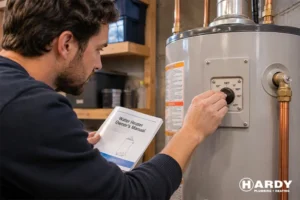
What Can You Safely Check Yourself?
- Look at the thermostat setting and compare it with your owner’s manual.
- On a gas unit, check that the pilot light is lit through the viewing window.
- On an electric unit, check the breaker. Don’t open the element panels unless the power is off and you’re trained to do it.
- Listen for popping or rumbling, which hints at sediment.
- Spread out showers, laundry, and dishwashing so the tank has time to recover.
If you smell gas near the heater, leave the house and call your gas utility from outside.
What Mistakes Make It Worse?
- Cranking the thermostat way up. Hotter settings raise the risk of scalding and speed up wear.
- Ignoring leaks or rust-colored water. These can signal a tank that’s failing.
- Skipping maintenance. Tanks that are never flushed tend to build sediment faster.
Why Choose Hardy Plumbing & Heating for Water Heater Repair?
Our licensed plumbers handle water heater service and maintenance across Eastern Long Island, from Riverhead and Southold to Southampton and Montauk. We test elements, thermostats, burners, and dip tubes, then explain what failed before starting any work.
If your tank is near the end of its life, we’ll walk you through water heater installation options sized for your home.
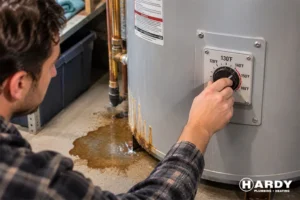
Final Thoughts
Less hot water in winter is partly normal, but a sudden drop usually means it’s time to repair your water heater. Hardy Plumbing & Heating can find the cause, fix it, and keep the showers hot all season.
Need help today? Call Hardy Plumbing & Heating at (631) 283-9333 (South Fork), (631) 298-8181 (North Fork), or (631) 289-1414 (Brookhaven), or request 24/7 emergency service.
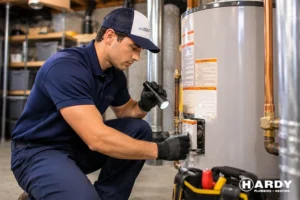
FAQ for Why Is Your Water Heater Not Producing Enough Hot Water in Winter
Why does my hot water run out faster in winter? The water entering your tank is colder, so it takes longer to heat each gallon. Your tank recovers more slowly between uses.
What temperature should my water heater be set to? The U.S. Department of Energy says 120°F is enough for most households. Check your manual before changing the setting.
How do I know if my heating element is bad? On an electric unit, a short burst of hot water followed by cold water often points to a failed lower element. A plumber can test it safely.
Should I repair or replace my water heater? It depends on the tank’s age, its condition, and the cost of the part. Leaks from the tank itself usually mean replacement, while element, thermostat, and dip tube problems can often be fixed.